
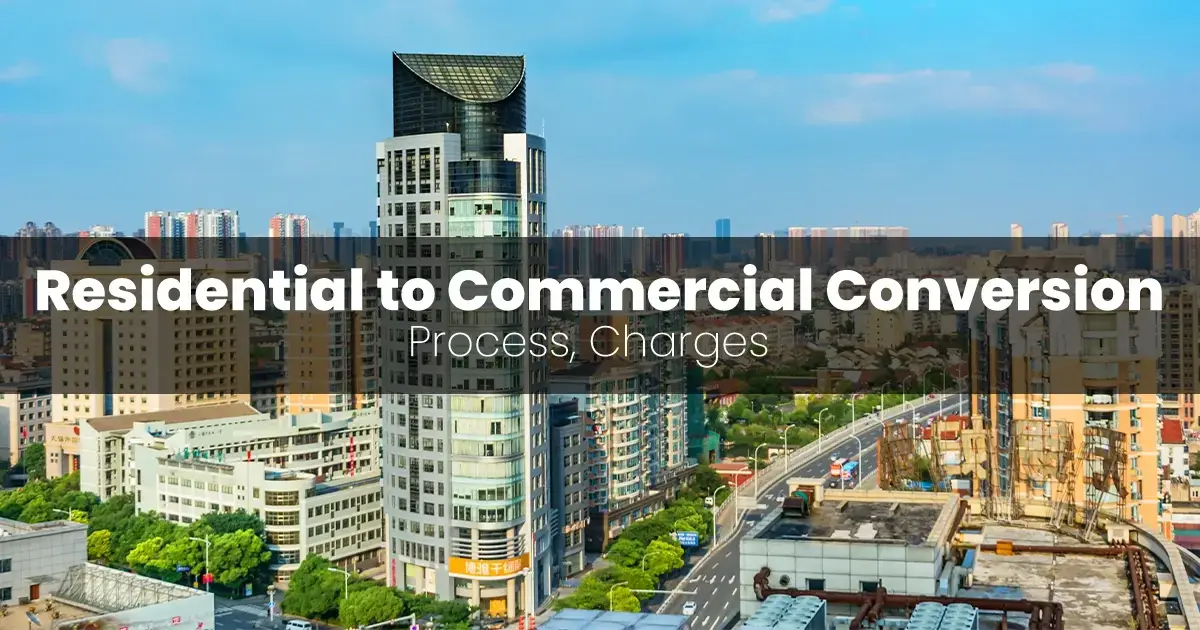
Behind the walls of every residential property lies untapped commercial value, just waiting for a strategic enough mind to unlock it. This includes not just open spaces that have become commercially zoned by law as part of an evolving law adapting to the growing urban environment but are now capable of identifying gains from converting a property into a commercial asset. The process to convert residential to commercial is not just a legal process but a strategic move toward maximizing property value.
From a high-visibility villa on a main road to an underutilized apartment tucked in an emerging business cluster, properties such as these can be converted into revenue-generating storefronts, clinics, or offices-legally and lucratively. However, even intention alone is not enough; know-how on local by-laws, conversion charges, municipal permission, and strategic foresight are required.
This blog explains the entire process and the entire washing of residential into commercial conversion so that its possible readers can sail into the many aspects, including navigating the legal routes, weighing the financial ramifications, and considering whether their property amounts to much in the way of returns for this transformation.
What is Residential to Commercial Conversion?
The conversion of property from residential to commercial property is a process in which the land-use classification of a given property is officially changed from residential to commercial by a competent urban development authority or municipal corporation.
Master/Zonal Plans developed by the state planning department govern land use in India. The Master/Zonal Plans group areas into residential, commercial, industrial, public/semi-public or mixed-use, and such classification is, in fact, superior to this classification. Any deviation from the approved use without permission is illegal.
After converting such residential properties, you may lawfully undertake the following activities.
- Retail outlet or showroom.
- Office and co-working space.
- Clinic and diagnostic lab.
- Salons, cafes, or wellness centres.
- Guest houses or boutique hotels.
But such an activity that is commercial in nature within the premises of residential zones becomes illegal unless approved for the conversion.
Also Read: Commercial Zoning Laws Explained 2026: Types & Regulations
Can We Use Residential Property for Commercial Use?
The most asked question by people, which has the most subjective reply:
(a) zoning laws of that area, and (b) the business scale and its nature.
Permissible Use without Conversion:
Some low-intensity professional activities may be permitted in residential premises without complete conversion:
- Home-based tuition classes.
- Freelancing/consulting work (e.g., chartered accountants, lawyers).
- Tailoring or art studios without retail display.
- Online businesses with no footfall or inventory.
This falls under "permissible commercial activity in residential zones" in many master plans—but subject to certain limits, to the extent of:
- Not exceeding 25% of the built-up area.
- Not causing traffic congestion.
- No hoarding boards or signage.
- No manufacturing or heavy storage.
Any business attracting visitors, deliveries, or staff requires a change of use from residential to commercial.
Also Read: What Is Commercial Real Estate? Meaning & Key Insights
Why Convert Residential to Commercial?
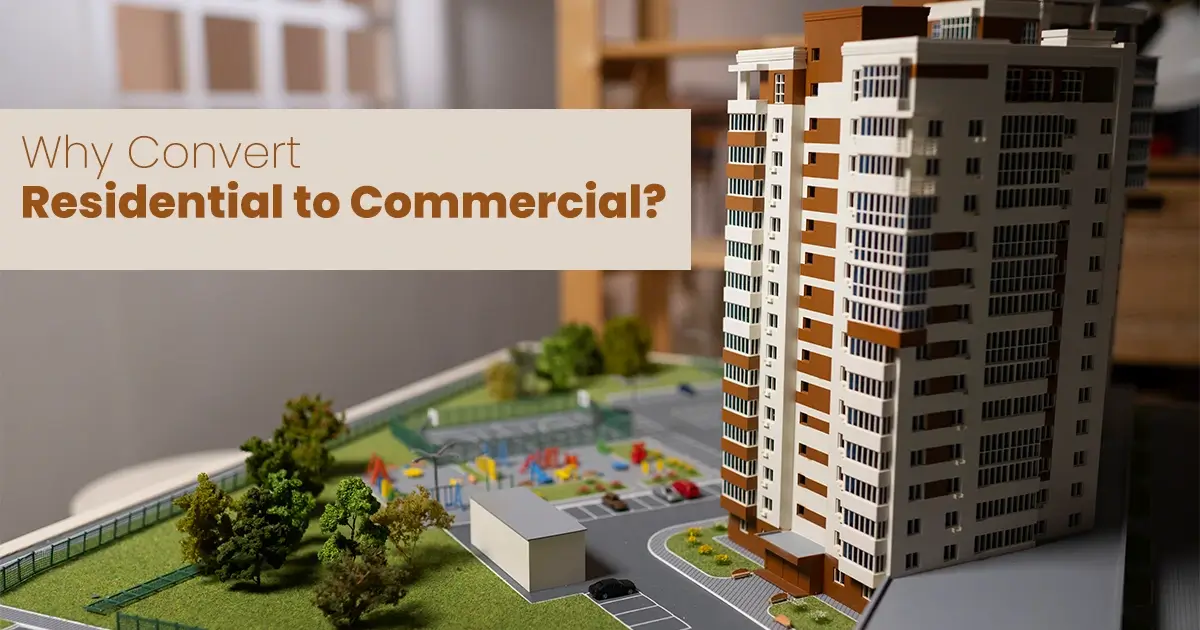
Understand this compelling strategy before you plunge into the procedure:
Conversion Advantages:
- Higher Rental Returns: 2-3 times the rent is usually collected when properties are converted from residential to commercial.
- Capital Appreciation: Generally, these are properties with a greater resale value after conversion into commercial, especially in the highly sought-after locations.
- Leases More Easily: Commercial-ready gives office space up for rent for retail chains and professionals in the medical field.
- Better Resource Efficiency: Misuse of some residential lands can still be revamped for better effectiveness in some very strategic locations.
How to Convert Residential Property to Commercial?
There are procedures to be followed to transform residential property into commercial property legally and administratively. They will usually differ among cities or states, but are generally consistent.
Instructions in Steps:
Check Zoning Laws
Before making an application for conversion:
- Check the Master Plan/Zonal Map of your locality (available from the local development authority).
- Find out if your area allows commercial or mixed-use activity.
- Some areas are strictly residential (gated communities, defense colonies, etc.), where no conversion is permissible.
Application Submission Before the Local Authority
After all else is done and conversion is permitted, do the following:
Submit a formal application to either the concerned development authority or the municipal corporation, including:
- Proof of ownership of property
- Latest property tax paid receipts
- Site plan and building layout
- Utility bills
- Photographs of the premises
- Proposed commercial use
- No Objection Certificate (if needed) from society/neighbours
Authorities involved may include:
- Delhi: DDA/MCD Conversion Charges
- Bangalore: BDA/BBMP
- Mumbai: MMRDA/MCGM
- Hyderabad: HMDA/GHMC
Pay Conversion from Residential to Commercial Fees
After that, the authority will check the application and take charges to convert residential property in commercial property. The costs depend on:
- Size of plot or built-up area
- Type of activity (office, retail, clinic, etc.)
- Locality classification (core zone, main road, secondary road)
- Width of abutting road
Residential to Commercial Conversion Charges (Indicative):
| City | Approx. Rate |
|---|---|
| Delhi | ₹3,000 – ₹15,000 per sq.m (as per use & zone) |
| Bangalore | ₹250 – ₹600 per sq.m based on zone & road width |
| Hyderabad | 20–30% of property guideline value + impact fee |
| Mumbai | Based on premium FSI + development charges |
| Gurgaon | Based on the collector rate + infrastructure fees |
Check the official bulletin of the concerned authority regarding the current figures.
Site Visit:
Payment and Submission:
The officials will conduct a site visit.
They will verify:
- Structural safety and compliance
- Accessibility (e.g., parking, setbacks)
- Usage compatibility with the neighbourhood
The file moves ahead for approval if no violations are found.
Approval and Issuance of Conversion Certificate, assuming satisfied checks:
You will receive an official Change of Land Use (CLU) certificate.
This is your legal document to sell your property as a commercial-use space.
Now update municipal records, and you will have the commercial property tax rates applicable to your property.
Legal and Compliance Considerations
After the conversion of your property, consider the following:
Increase in Property Tax
Commercial properties attract higher rates of taxation. Look for some revision in your annual property tax assessment.
Trade and Business Licenses
Depending on your commercial activity, you may require:
- Trade license (local municipal body)
- GST registration
- Fire safety clearance (for clinics, restaurants, etc.)
- Pollution control approval (if applicable)
Building Compliance
- Fire exits, access for disabled persons, proper toilets, ventilation, etc., may be mandatory.
- In some cities, parking norms and setback rules differ for commercial properties.
Challenges to Convert Residential to Commercial
But, facing the upside, conversion is not without certain impediments:
Common obstacles encountered:
- Opposition from RWAs or neighbours
- Lengthy approvals followed by bureaucratic delays
- Higher conversion and development costs
- Ineligibility due to road width or zoning
- Need for structural alterations to comply
Always check with architects or urban planning consultants regarding the feasibility of your plan.
Concluding Thoughts
Converting residential properties for commercial use may generate income as well as long-term appreciation, especially in fast-developing localities. The process, however, must be legally sound, with an understanding of zoning, and sufficiently planned financially.
If you do choose to go that way, do the following:
- Check zoning permissions.
- Cost to convert residential to commercial.
- Get all necessary approvals from regulatory authorities.
- Prepare for compliance obligations.
Doing it right from the outset guarantees your project's viability and protection under the law.
Leave a Comment